
"there are about 40 species"
500 article(s) found

Coffee beans would rather have some kind of basic knowledge of coffee.
Thousands of years ago, when Chen Sheng and Wu Guang rose up, he shouted: how dare a prince? Of course, it sounds very pleasant to us, who have long been used to the idea of equality for all, but if this sentence is put on the coffee beans, it is estimated that the beans will jump out and object: we all have to talk about our origins! In our opinion, they are all small black charcoal-like coffee beans, in senior coffee.

How to classify coffee beans
Plant classification Coffee tree belongs to the evergreen tree of Rubiaceae. Rubiaceae plants have been dominated by plants with special effects since ancient times, such as quinine tree, which is regarded as a specific drug for malaria, and Dugan, which is used to treat Amiba dysentery. Coffee is defined as the most unique alkaloid drinking flora. Usually after sowing for two to three years, coffee trees can grow to a height of about five to ten meters, but to prevent the loss of coffee beans.

Do you know the blood system of boutique coffee?
Coffee is a plant of the Rubiaceae family that contains at least 500 herbs, and coffee is one of the most common shrubs. In coffee noodles, there are ten varieties, most of which have no economic value, and only three of them are popular in the whole world. Arabica (Arabica), Sabsta (Robusta), Liberia (Liberica). Arabica beans taste good and are the main source of refined coffee, but

How to choose coffee beans what are the characteristics of coffee beans?
Plant classification Coffee tree belongs to the evergreen tree of Rubiaceae. Rubiaceae plants have been dominated by plants with special effects since ancient times, such as quinine tree, which is regarded as a specific drug for malaria, and Dugan, which is used to treat Amiba dysentery. Coffee is defined as the most unique alkaloid drinking flora. The fruit of coffee is made up of outer skin, pulp, endocarp, silver skin, and the species wrapped in the innermost layers mentioned above.

Colombian coffee tree cultivation method in the Andean Mountains
The pure taste of Colombian coffee comes from Colombia's natural environment with the most favorable conditions for coffee growth. But beyond that, it is inseparable from the hard work of local growers. In Colombia, coffee cultivation has reached 1.07 million hectares, there are about 302000 coffee plantations in the country, and 30 to 40 per cent of the rural population depends directly on coffee production. Columby

The basic knowledge of Coffee beans Coffee beans "would rather have balls"
Thousands of years ago, when Chen Sheng and Wu Guang rose up, he shouted: how dare a prince? Of course, it sounds very pleasant to us, who have long been used to the idea of equality for all, but if this sentence is put on the coffee beans, it is estimated that the beans will jump out and object: we all have to talk about our origins! In our opinion, they are all small black charcoal-like coffee beans, in senior coffee.

What kind of coffee beans do they belong to in plants
Coffee tree belongs to the evergreen tree of Rubiaceae. Since ancient times, most of the plants of Rubiaceae are plants with special effects, such as quinine tree, which is regarded as a specific drug for malaria, and Dugan, which is used to treat amoeba dysentery. Coffee is defined as the most unique alkaloid drinking flora.

What are the requirements for the growing conditions of coffee beans? Is there anything particular about planting? How do you plant it?
Professional coffee knowledge exchange more coffee bean information Please pay attention to the coffee workshop (Wechat official account cafe_style) what are the requirements for the growing conditions of coffee beans? Is there anything particular about planting? How do you plant it? VS Coffee lovers will study how to roast and grind coffee beans, but they seldom delve into how coffee beans are grown. The coffee tree was originally

The planting Environment of Colombian Coffee Tree Manning Indonesia
The pure taste of Colombian coffee comes from Colombia's natural environment with the most favorable conditions for coffee growth. But beyond that, it is inseparable from the hard work of local growers. In Colombia, coffee cultivation has reached 1.07 million hectares, there are about 302000 coffee plantations in the country, and 30 to 40 per cent of the rural population depends directly on coffee production. Columby

After-taste Lazimus Manor, Colombia, the cultivation of boutique coffee beans, geographical location and climate.
Compared with other producing countries, Colombia is more concerned with developing products and promoting production. It is this, coupled with its superior geographical and climatic conditions, that makes Colombian coffee excellent in quality and delicious and famous all over the world. The status of coffee in Colombia is evident in the following example: all vehicles entering the country must be sprayed and sterilized so as not to inadvertently cause disease and damage coffee trees.

Introduction to the six major producing areas of Colombian coffee
The six major producers of Colombian coffee introduce the natural environment in Colombia which has the most favorable conditions for coffee growth. But beyond that, it is inseparable from the hard work of local growers. In Colombia, coffee cultivation has reached 1.07 million hectares, there are about 302000 coffee plantations in the country, and 30 to 40 per cent of the rural population depends directly on coffee production. Although Colombia

A brief introduction to the types and origin of coffee beans Robusta coffee beans taste like no moisturizing skin
Professional coffee knowledge exchange more coffee bean information please follow the coffee workshop (Wechat official account cafe_style) front street-coffee bean variety profile Arabica, the synonym for high-end coffee Arabica species accounts for about 70% of the world's coffee production, the vast majority of coffee beans that we become raw beans in daily life are Arabica varieties. Because Arabica grows coffee

Colombia Andijia FNC coffee beans how to make a cup of hand brewed coffee how to flush out the grease
Professional coffee knowledge exchange more coffee bean information Please follow Coffee Workshop (official Wechat account cafe_style) average altitude: 2000 meters area: Colombian Coffee-Aandi Manor area: 3.5ha Tree species: 75% Castile 25% Kaddura treatment: washing and degumming, sunlight drying flavor description: apples, peach juice, plums, black

What is the growing environment of Yunnan Baoshan Iron Card Coffee Beans? Baoshan coffee beans Arabica coffee is tin
Professional coffee knowledge exchange More coffee bean information Please pay attention to coffee workshop (Weixin Official Accounts cafe_style) Yunnan Baoshan iron card coffee beans growth environment? Is Baoshan coffee beans a tin card? Yunnan coffee due to unique geographical environment and climatic conditions, formed a strong but not bitter, fragrant but not strong, with a little fruity unique flavor, the world

Botanical classification of coffee beans
Coffee tree belongs to the evergreen tree of Rubiaceae. Since ancient times, most of the plants of Rubiaceae are plants with special effects, such as quinine tree, which is regarded as a specific drug for malaria, and Dugan, which is used to treat amoeba dysentery. Coffee is defined as the most unique alkaloid drinking flora. Usually after sowing for two to three years, coffee trees can grow to a height of about five to ten meters, but to prevent coffee beans from losing their aroma and flavor.
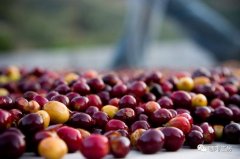
Introduction to the subclassification of common coffee varieties in cafes
For the exchange of professional baristas, please pay attention to the coffee workshop (Wechat official account cafe_style) coffee beans are divided into three original systems: Arabica coffee beans, also known as Arabica coffee beans, robusta coffee beans, also known as Congo coffee beans, Libyan coffee beans, also known as Liberian coffee beans, there are more than a hundred common cultivated species in the world today, mostly belonging to three original systems and several hybrids.

Which three types of coffee beans include Arabica coffee beans with rich aroma and high acid quality
Professional coffee knowledge exchange more coffee bean information please follow the coffee workshop (Wechat official account cafe_style) front street-coffee bean variety introduction Arabica species account for about 70% of the world's coffee production, the vast majority of coffee beans that we become raw beans in daily life are Arabica varieties. Because Arabica coffee has a charming aroma and rich flavor

A brief introduction to the planting situation of Colombian Huilan boutique coffee beans, geographical location, climate and altitude
The pure taste of Colombian coffee, in addition to the natural environment with the most favorable conditions for coffee growth, is inseparable from the hard work of local growers. In Colombia, coffee cultivation has reached 1.07 million hectares, there are about 302000 coffee plantations in the country, and 30 to 40 per cent of the rural population depends directly on coffee production. There are many farms in Colombia, but

2019 Jigodibei native species slow drying washing Ye Jia Xue Fei brewing method sharing
Professional coffee knowledge exchange More coffee bean information Please pay attention to coffee workshop (Weixin Official Accounts cafe_style) Ye Jia Xue Fei to coffee, just like oolong to tea, Bordeaux to red wine, even if it cannot be said to be synonymous, at least it is a must visit in the drinking map. For many coffee-loving friends, Yejia Shefei is their transition from coffee addiction to taste.

Introduction to the description and treatment of the Flavor of Tree species in Columbia Emerald Coffee Bean Manor
The flavor description method of Colombian boutique coffee beans introduces that the varieties of Colombian coffee are mainly small grains. Plants are small trees or large shrubs, 5-8 m tall, usually much branched at base; old branches gray-white, nodes dilated, young branches glabrous, compressed. Leaves thinly leathery, ovate-lanceolate or lanceolate, 6-14 cm long and 3.5-5 cm wide, tip long acuminate, acuminate part 10-15 long